Dr. Jeff Buxton, DMD
Diplomate, American Sleep & Breathing Academy · Vivos VIP Provider · Breathe Institute Ambassador
"I have always been an out of the box thinker." That's how Dr. Buxton describes himself, and it's how he practices. He questions everything until he finds the root cause, and he built Toothpillow Breathing & Sleep Center around one idea: your mouth, jaw, and airway are part of a larger system that helps your whole body and mind work at their best.

A whole-body dentist who starts with the airway
Dr. Buxton's interest in health started long before dental school. Improving his own health has been a passion since he was a teenager, and that search took him down many paths before it led to breathing and sleep. His journey into dental sleep medicine began more than 20 years ago. After years running his own general practice in Utah, he now focuses exclusively on TMD, airway, and dental sleep medicine.
"The power of treatment starts with appropriate diagnosis," he says. So every plan here begins with real data: a 3D CBCT scan of your airway and jaws, sleep screening for adults, and a careful look at how you breathe, swallow, and rest your tongue. From there, he explains what he sees in plain language and gives you options.
See how our office is different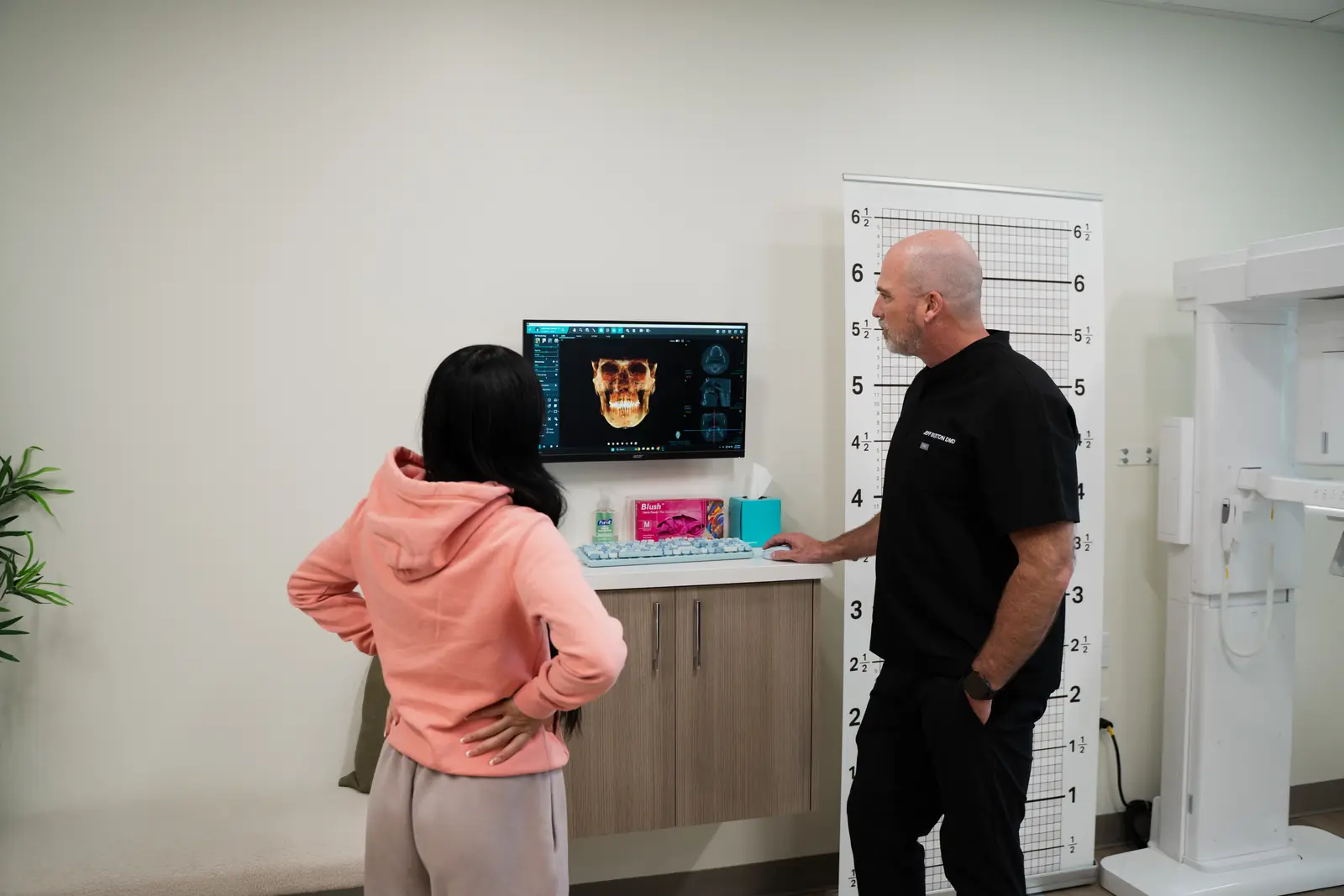
Expansion for adults, including DOMEzero
Many adults come to Dr. Buxton after years of snoring, waking up tired, or living with a CPAP that never quite worked for them. For adults with a narrow upper jaw, he uses the DOMEzero protocol: gradual palatal expansion supported by small anchors and paired with Spark clear aligners from the start (or with AIRTHO airway aligners as his MASPE+ protocol). He also has extensive training in the Vivos Method, mandibular advancement appliances, and soft tissue laser therapy for the palate.
All adult patients are screened for obstructive sleep apnea, and sleep data is interpreted by a sleep physician. Dr. Buxton coordinates with your medical providers every step of the way.
Adult sleep and airway care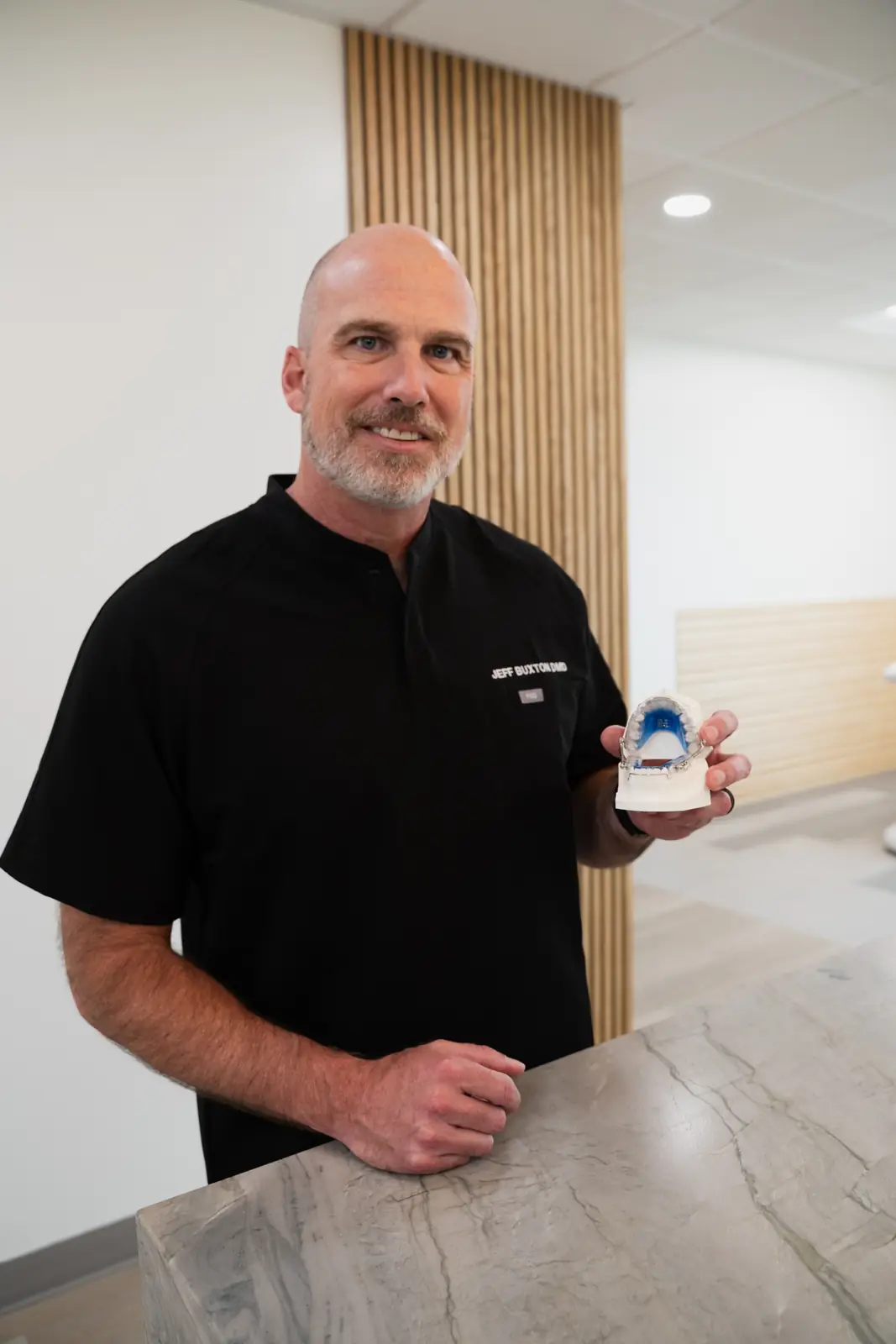
Growth guidance for kids, starting early
For children, Dr. Buxton's focus is timing. A child's jaw does most of its growing early, and guiding that growth inside the window is gentler than correcting it later. He treats kids with removable growth appliances, fixed expanders, AIRTHO aligners for kids and teens, and laser tongue-tie release paired with myofunctional therapy.
As the in-person home of the Toothpillow brand, our Draper office also sees kids whose needs go beyond what a virtual program can do.
Kids airway care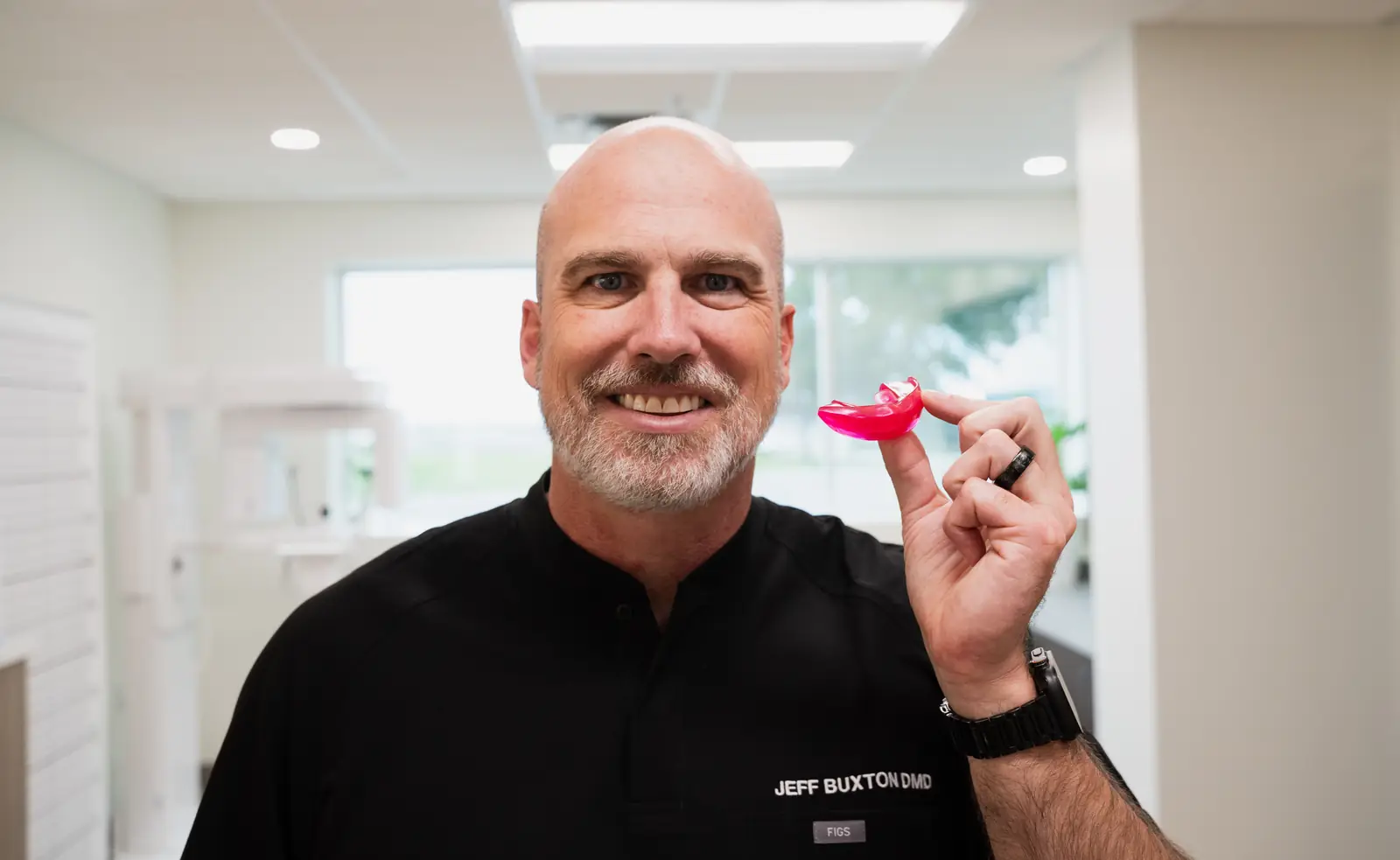
The training behind the care
Education
- Doctor of Dental Medicine (DMD)
- Temple University School of Dentistry
- Graduated 2008
Diplomate & Provider
- Diplomate, American Sleep & Breathing Academy
- Vivos VIP Provider
- Breathe Institute Ambassador
- DOMEzero Provider
- Diplomate, International Dental Implant Association
Memberships
- American Academy of Dental Sleep Medicine (AADSM)
- American Academy for Oral Systemic Health (AAOSH)
- American Academy of Physiological Medicine and Dentistry (AAPMD)
- World Dentofacial Sleep Society
Advanced Training
- DOMEzero and MARPE adult expansion
- The Vivos Method
- Mandibular advancement appliances
- Soft tissue laser therapy (palate and tongue ties)
He doesn't work alone, and neither will you
Airway health crosses a lot of specialties. Dr. Buxton works with a multidisciplinary team that includes ENTs, sleep physicians, pulmonologists, oral surgeons, orthodontists, chiropractors, and myofunctional therapists. When your imaging or sleep data shows something outside our office's scope, he refers you to the right person and stays in the loop.
Inside our Draper office, you'll work with dentists, therapists, sleep techs, and coordinators who support you from the first scan to your last check-in.
Meet the team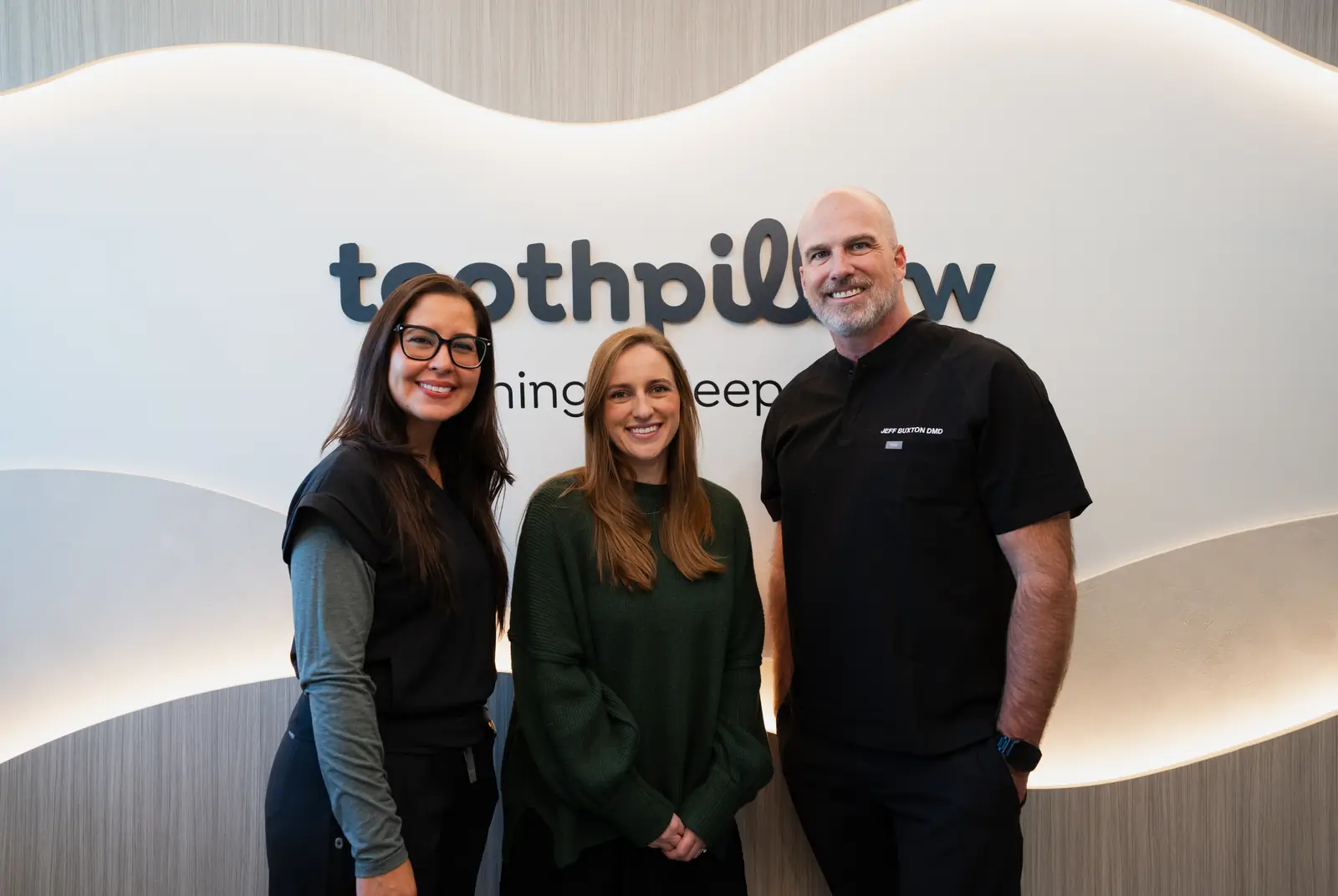
Hear it from Dr. Buxton
Short videos on airway, sleep, and growth. Educational only; every patient is different.
Sometimes I see patients with beautiful straight teeth, great smile, doesn't necessarily mean they have a great airway. I take an x-ray, I look at those things, the 3D scan of the airway, and I may see straight teeth, but what I see is sometimes a narrow airway. Jaw position is really what opens up that airway.
So you can have straight teeth, an underdeveloped upper jaw, which then traps in the lower jaw, which keeps the tongue back, which is now restricting the airway, and so it's difficult to breathe. But you've got these beautiful teeth and they may be orthodontically straight or they may even be veneers and they were restored into a position with the jaw back restricting the airway. You know, we need to be thinking about these things early on.
We're not just treating the mouth, we're treating the whole body. Things are slow to change, especially in traditional medicine and traditional dentistry. These treatments aren't new. They've been around for a long time, but they were being done by pioneers and those that were more forward thinking and willing to look outside the box.
And as they provided these treatments, found that they were working and helping people to be healthier and sleep better, breathe better. And all of those things have a domino effect on the rest of your health. Over the last 20 years, the envelope has been pushed by certain practitioners out there. What has happened in the advancement of this airway education and the advancement of the treatments that we provide is that there were providers who were willing to work with providers from other areas and understand that we're not just treating the mouth, we're treating the whole body.
Why are the teeth crowded? The teeth are crowded because there's not enough room in the jaws for the teeth to come in. Instead of wondering why the teeth are crooked and thinking, how can we go upstream and maybe avoid these crooked teeth? We've just accepted, hey, we'll just straighten the crooked teeth out when all the baby teeth are gone.
And you're left with straight teeth, but those teeth have been put in an unstable position. That's the reason why a retainer is needed. If you don't wear the retainer, the teeth are going to try to move back into a more stable position in the bone. Think of it this way. You've got 32 chairs and you have a room and that room is your mouth and you need to fit all 32 chairs in that room.
Let's make sure that we build a big enough room for all of the teeth. And how can we build a big enough room? Well, as dental professionals, we can do expansion. As we make the room bigger, now the teeth are going to come in where they need to be.
I love when old photos of my kids pop up on my phone. One thing that I look at and I like to look at is their growth and development from those younger ages. So why is that important to airway growth and development? When you look at your child's face from where they were three years ago to now, some of the things that you could look for that could change, that could maybe say your child is moving in the wrong direction as far as growth and development is concerned, is going to be open mouth posture, a longer face, head forward posture would indicate having trouble breathing.
Again, dark circles under their eyes. These are all things that show up and would indicate to us that maybe our child's growth and development is not where it needs to be. And we have this window of time where we can affect so much change. If you're seeing some of those signs, that's going to indicate that maybe we need to redirect some of that growth and it can be done. Think about going in for an airway assessment and getting evaluated by a professional.
Large tonsils or adenoids is a response to some trigger. The question is what causes it? And that's a big debate. Poor air quality, dust mite allergy in the home, mold, recurrent viral infections can cause that. But also when it comes to an airway dentist and what we're looking at. We know that mouth breathing contributes to the inflammation of the tonsils and adenoids as well.
So the way to look at this is our airway is like a pipe and we want that pipe to be free of any blockage. If we're not getting enough oxygen, it affects our heart. It affects anxiety. It affects numerous things, right? And where we see this a lot is in kids, right? Adults don't have the tonsils and adenoid issues or the hypertrophy that you see in kids.
It's important that they be evaluated. There are studies that are showing that when we expand, we actually see a reduction in the size of the tonsils and adenoids. Expansion plays a big part and really airway dentists and ENTs should be collaborating and working together better to provide optimal care for our kids.
Waiting could mean missing a critical window that never comes back. Let me explain the difference. Braces straighten teeth. They move teeth within the jaw you already have. They're about alignment. Expansion creates more jaw. It actually grows the jaws wider creating more room. Now here's the critical part. You can only efficiently expand the jaw during the growth years.
Braces can straighten the teeth but they cannot enlarge the jaw. They cannot open the nasal airway. They cannot improve breathing and sleep the way early expansion can. At that point, to get to the same results, we would need more complicated expansion, possibly even breaking the jaw to reopen that growth plate. So the question isn't, should we wait for braces?
The question is, does my child need more jaw development while we still can? If your child has crowded teeth, mouth breathing, snoring, or a narrow smile, don't wait. Let's evaluate them now while we can still take advantage of their natural growth because this window doesn't stay open forever.
Have you ever been told that you grind your teeth and that it's due to stress? I'm here to tell you that it is, but it isn't. It's actually due to respiratory distress. So when we grind our teeth, we're bringing our jaw forward, which in turn opens up our airway so that we can breathe better.
Without getting that oxygen in, our body is feeling that oxidative stress. So that is why you're most likely grinding. And if you are grinding, that's a sure sign that you should probably get checked out. See what your sleep looks like.
How many people have got to have a coffee to start out their day or some type of caffeinated beverage. When I was a kid, we had a Coke and a Coke had like 50 milligrams of caffeine. Today, you walk into a gas station to grab a drink. It's like 300 milligrams of caffeine, like six times more.
Why do we need that? It's actually super interesting, right? As we wake up in the morning, if we're not feeling alert, we need that caffeine. And then we consume that caffeine throughout the day. It's creating this negative spiral, right? It's affecting our sleep for the night already in the morning. How that is working is that we actually have something that is called adenosine and it builds up throughout the day.
It prepares us to fall asleep, but the caffeine delays that buildup. It can affect our ability to fall asleep at night and to get good quality sleep. And so if we're not getting good quality sleep, that buildup of adenosine doesn't reset in the night. And so we wake up in the morning feeling tired.
Now we need another coffee. We need a Monster, a Red Bull, to get through the day. If you think about each day, that building on it on each day, you're just going to constantly feel tired and fatigued. If you're feeling fatigued all the time, probably important to get a sleep screening, a sleep test, talk to your doctor, talk to your dentist. It's an important thing.
Most of us have heard the song, it's raining, it's pouring, the old man is snoring. We grow up thinking that when we become old men, we're going to snore, right? Our grandpa snored, our dads maybe snored. We kind of thought it was endearing and cute, but I'm here to tell you, not endearing or cute.
In fact, it's a sign of underlying health issues. In fact, some of you probably have heard of obstructive sleep apnea. The starting point for obstructive sleep apnea can often be snoring. The other one is upper airway resistance syndrome, but the two are highly related. In fact, when we snore, most of the time it's related to our mouth breathing.
In fact, mouth breathing and snoring is bidirectional. The more we mouth breathe, the more we snore. And the more we snore, the more likely we are to mouth breathe. So an interesting exercise you can do at home is you can keep your lips together, breathe through your nose and try to snore. It's extremely difficult to do.
But then after that, let's have you open your mouth, breathe in and try to snore. And you find that it's very easy to do. So snoring is not something that we want to be doing. In fact, if you or your spouse is snoring, it's time to maybe do a sleep screening and find out what's happening at night and what's happening with your breathing.
What is actually causing your airway to collapse? Because until you answer that question, you're not solving the problem. You're just managing it. Most people who are diagnosed with sleep apnea or breathing problems get handed a CPAP machine and sent home. But nobody asks the most important question. Why is this happening in the first place?
At our practice, before we recommend any treatment, we do three things. First, we review your sleep data. not just your AHI score. Second, we take an airway CBCT, a 3D scan that shows us exactly where your airway is restricted. Third, we do an assessment of your muscles and TMJ. We look at your tongue posture and your breathing habits.
Only after all three of those assessments do we sit down with you and say, here is what is actually going on. For most patients, we find the same underlying problems. The jaw is too narrow, so the tongue falls back. The airway collapses. That's an anatomy problem, and anatomy can be changed.
And when we treat the airway issues, often the TMJ issues resolve. Most common patterns that I see, of course, they're not waking up, feeling rested. That's a big one. Caffeination throughout the day. Some of the other ones that you don't really think of are headaches when we're clenching or we're grinding our teeth during the night.
We're causing our muscles to fire all night long. You're going to have some muscular issues. Those muscles are going to be... uncomfortable and it's not going to take much to cause triggers. And those triggers lead to migraines. Those triggers lead to lots of tension in the neck, shoulders. Even sometimes you're going to get ringing of the ears.
Often I see patients who have airway issues have TMJ issues as well. And when we treat the airway issues, often the TMJ issues resolve. And you stack that on top of poor sleep and you've got someone who can't function.
Stop scrolling. I got a quick question for you. Where is your tongue rested right now? If your tongue is sitting low and not up at the roof of your mouth, we may have a problem. Let me break this down for you. When the tongue is sitting low, it leads to open mouth posture.
It also restricts our airway, which makes it harder for us to breathe. And if it's harder for us to breathe, we're going to open our mouth and do more mouth breathing. The other negative effect is we are bypassing the filtration system and the air that we're breathing in is unfiltered and is full of toxins and other things, which are going to make us sick.
Let's contrast that with having the tongue up high and to the roof of the mouth like it should be. When the tongue is to the roof of the mouth, our airway is more open. We're able to get more oxygen in and breathe better. We're also going to be breathing through our nose. which allows us to filter the air as it comes in, which leads to a healthier airway and a healthier you. So let's get that tongue up to the roof of our mouth.
Did you know that there are certain tools when implemented early in a child's development can have huge impacts not only on their health, but on the growth and development of their face, which affects their aesthetics and facial beauty. When I say the right tools, I'm not talking about a pacifier, which can have negative effects on growth and development.
In fact, there are numerous tools available to us today. And one of those is the products from ezpz, which are terrific at helping children grow and develop properly. Another one is Myo Munchee, which works extremely well for young kids also. So let's talk about what these right tools are actually doing. What they're doing is they are redirecting the muscular growth and development.
So when the muscles in the tongue are in the right position, we're going to get the proper growth that we want to see for kids to become healthy adults. You may even see teenagers or adults today doing something called mewing, where they're trying to define their jaws and improve some of those aesthetic qualities of the face.
But if we get started early with kids utilizing these tools, we can do that naturally because the face will grow the way it's supposed to.
Has your child's teacher raised concerns about their behavior or their inability to focus while at school? When I was a child, I had good grades, but my teachers noticed that I was distracted and that I was a behavior problem. So I was diagnosed with ADD and was put on a medication. As I know more today, I look back at my childhood and realize that that issue with ADD was very likely a sleep problem.
And that was confirmed for me as an adult when I was sleep tested and was diagnosed with severe obstructive sleep apnea. In fact, the research shows that up to 25 percent of kids who are diagnosed with add actually have a sleep quality problem that can show up as either sleep-disordered breathing or in severe cases obstructive sleep apnea. Next time that you're at a parent-teacher conference or if you've seen that report from your child's teacher maybe dig a little bit deeper and take a look at their sleep quality.
Patients on Dr. Buxton
Individual experiences; every airway is different.
"Dr. Buxton really cares about his patients. I couldn't be happier with the results! ... Not to mention the new office and decor are absolutely stunning. Everyone in the office is so friendly!"
"You will love working with the practioner and staff. They are knowledgeable and friendly. It has been a great experience every appointment. It’s a nice plus that the office is also a beautiful place."
"I love the professionalism the all Buxton Dentistry staff have. I love the customer service skills and Dr Buxton has a lot knowledge about his profession also he loves what he does that is the reason he is so happy always smile to his patients"
"I absolutely hate going to the dentist BUT Dr Buxtons team makes it feel bearable to get through my appointments. They’re a great staff! Highly recommend going there!"
"During the 75 years of my life I have seen numerous dentists. Dr Buxton is without doubt the best. It is not only the high quality of his work, it is also his compassion, concern and his willingness to do more. I feel so fortunate to be his patient."
"I had a very specific need when I went to see Dr Buxton. I had never met him before. He was friendly, understanding and met my need exactly. It was great! The staff was great. I’m going back and I’ve been waiting over 20 years to say that about a dentist!"
Schedule your consultation with Dr. Buxton
Book online or call. Consultations for kids, teens, and adults at our Draper office.
14203 Minuteman Drive #101
Draper, UT 84020
Just off I-15, minutes from IKEA
Monday to Friday, 9 AM to 5 PM
"Great place! They are doing it differently. Well done!"
Request Your Airway Consultation
Tell us a little about what's going on. Our team will call you to find a time that works. No pressure, just answers.