
TMJ treatment that looks for why your jaw hurts
Clicking, locking, headaches, a jaw that aches by dinner. If a night guard has only protected your teeth, Dr. Jeff Buxton takes a different approach: he looks at jaw position, bite, and airway together to find what may be driving the strain.
★★★★★4.9 on Google · 270+ Toothpillow reviews · Dr. Jeff Buxton, DMD
Your jaw, your bite, and your breathing are connected
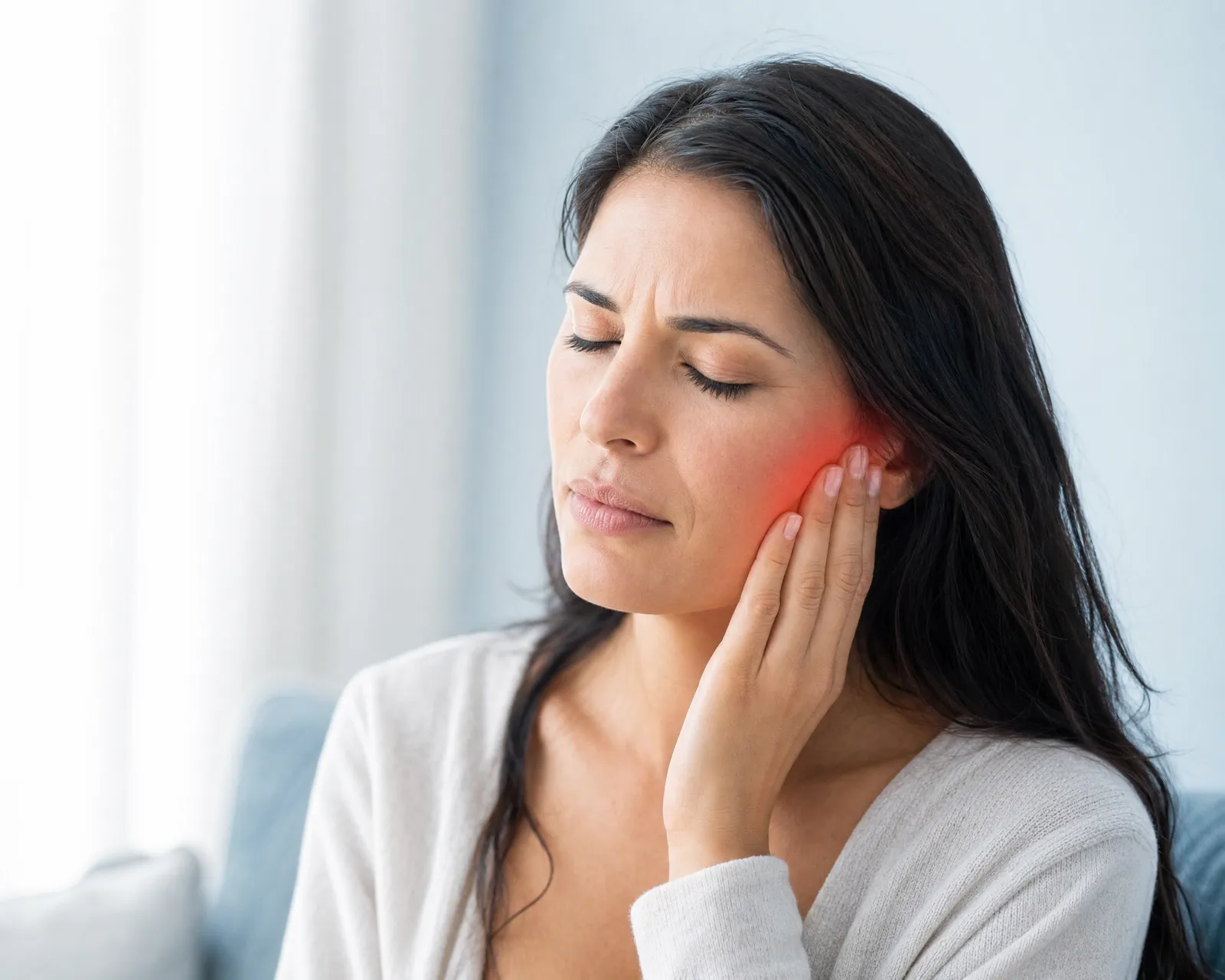
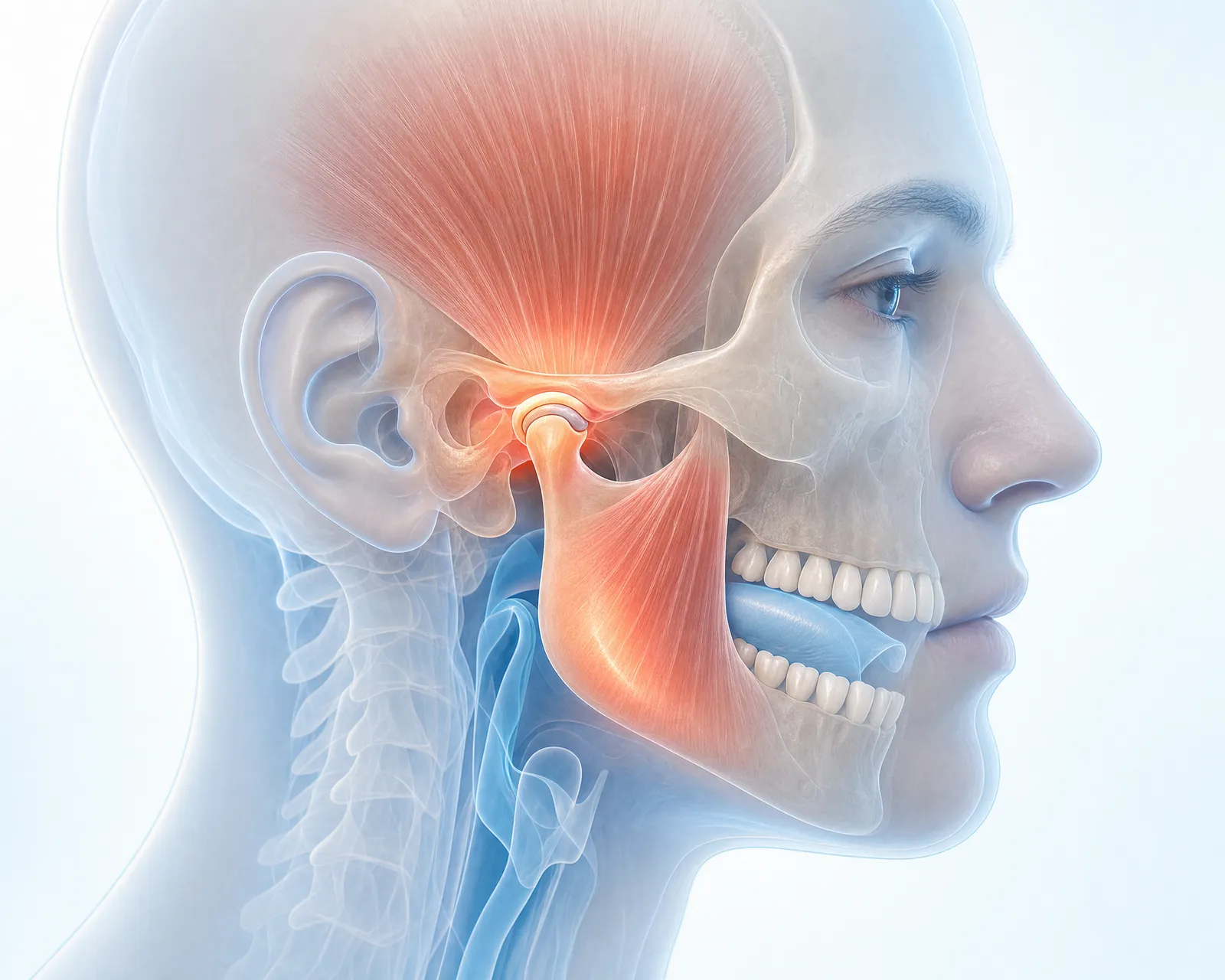
The temporomandibular joints (TMJ) sit just in front of your ears and move every time you talk, chew, or swallow. When those joints and muscles are under constant strain, you may feel it as jaw pain, clicking, tight temples, or headaches that show up first thing in the morning.
Here is the part many people have never heard: a narrow upper jaw can leave the lower jaw and tongue with less room, which may push the jaw into a strained position. And if breathing gets harder at night, the body may clench or push the jaw forward to keep the airway open. Could your grinding be connected to how you breathe while you sleep? It is worth finding out.
- Jaw position and joint health
- How your teeth meet (your bite)
- Airway space and sleep quality
Signs a TMJ evaluation may help
You do not need to have all of these. If a few sound familiar, an evaluation can help you understand what is going on.
Jaw pain or soreness
Aching in the jaw, cheeks, or in front of the ears, especially after meals or first thing in the morning.
Clicking or popping
A click, pop, or grinding sound when you open, close, or chew.
Locking or limited opening
A jaw that catches, gets stuck, or will not open as wide as it used to.
Headaches
Morning headaches or tension around the temples that no one has been able to explain.
Grinding and clenching
Worn teeth, a partner who hears you grind, or waking up with a tight, tired jaw.
Tired even after a full night
Waking unrefreshed, snoring, or restless sleep alongside your jaw symptoms.
Diagnosis first: the joint, the muscles, the bite, and the airway
With TMJ symptoms, the treatment that helps depends on what is driving the strain. A sore joint, overworked muscles, an uneven bite, and a narrow airway can all feel similar, and each calls for a different approach. That is why Dr. Buxton spends your consultation on diagnosis before anyone talks about treatment:
- 3D CBCT imaging of the jaw joints, the surrounding bone, and the airway
- Muscle testing: a hands-on evaluation of the chewing, jaw, and neck muscles, including tenderness, tension, and how far and how evenly the jaw opens
- A digital intraoral scan of your bite (no goopy molds), to see how your teeth meet and where they may be working against each other
- Photos and sleep data, when sleep may be part of the story
Then we sit down and walk through what the imaging and muscle testing show, in plain language. The goal is simple: match the treatment to the cause, so you aren't guessing.
It all starts with an airway consultation
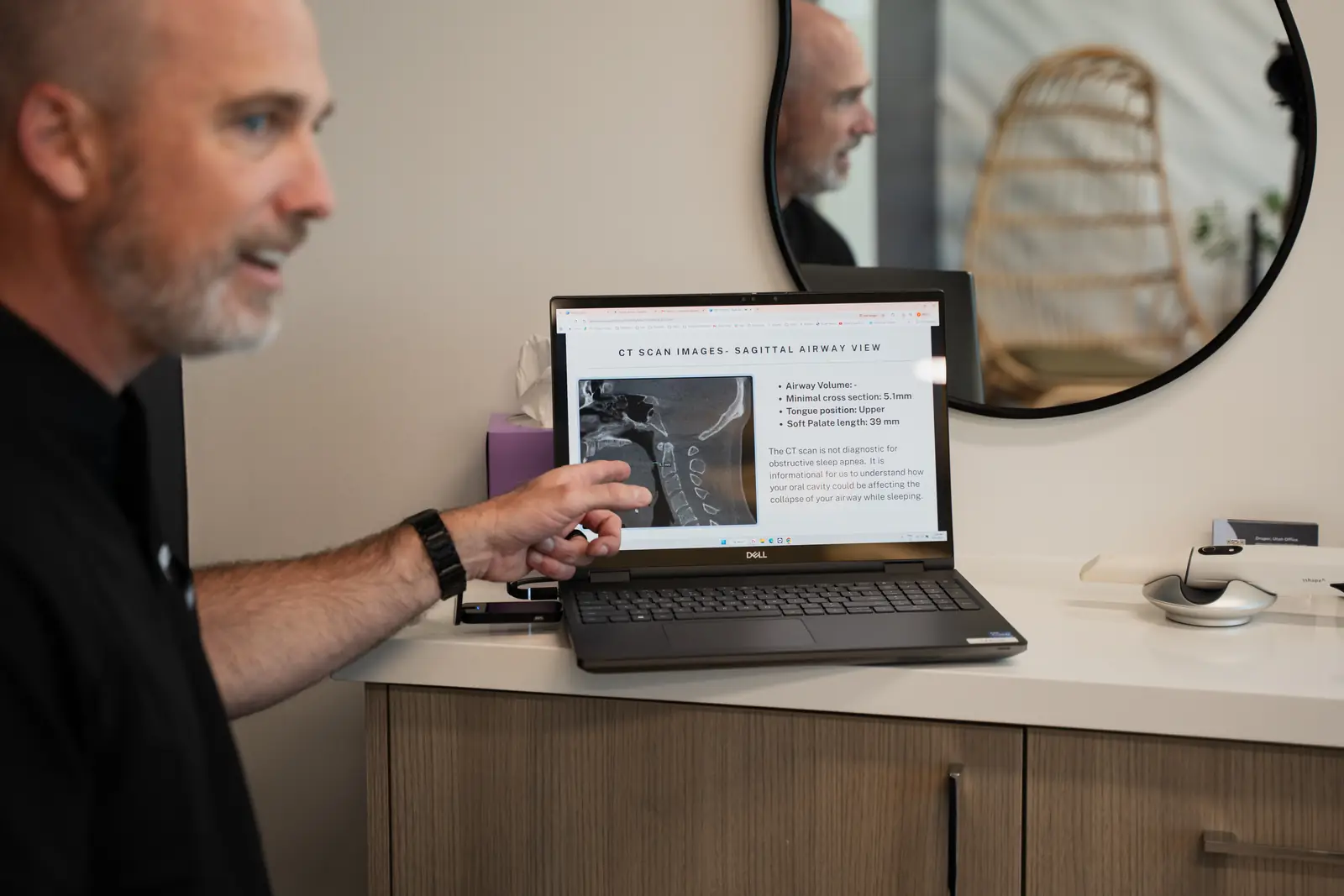
Before anyone talks treatment, we get the full picture. Your consultation with Dr. Buxton includes:
- A 3D CBCT scan of the airway, jaws, and joints
- A digital intraoral scan (no goopy molds)
- Photos and a hands-on exam of breathing, tongue, and bite
- A plain-language walkthrough of what we see and what your options are
Airway consultation: {$350 for kids and adults}
Your TMJ treatment plan, step by step
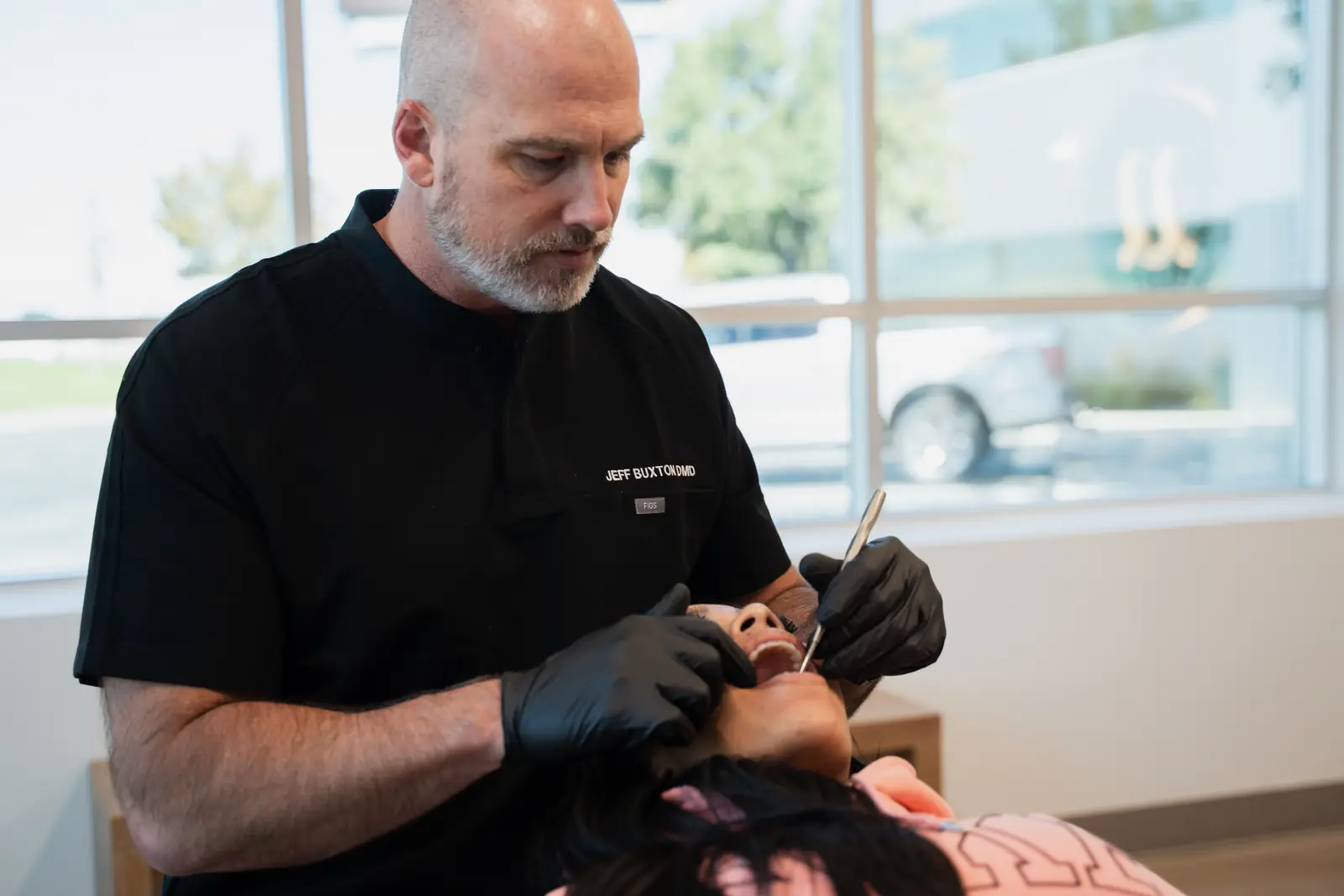
Every plan is built around your scans and exam. Here is how care often comes together for adults at our Draper office.
Airway consultation
CBCT imaging, a digital scan, photos, and a thorough exam of your jaw, bite, and airway, reviewed with Dr. Buxton.
Sleep screening, when it fits
If snoring, grinding, or tiredness suggest sleep may be involved, an at-home sleep test adds real data from your own bed.
DEKA HILT laser therapy and an occlusal guard
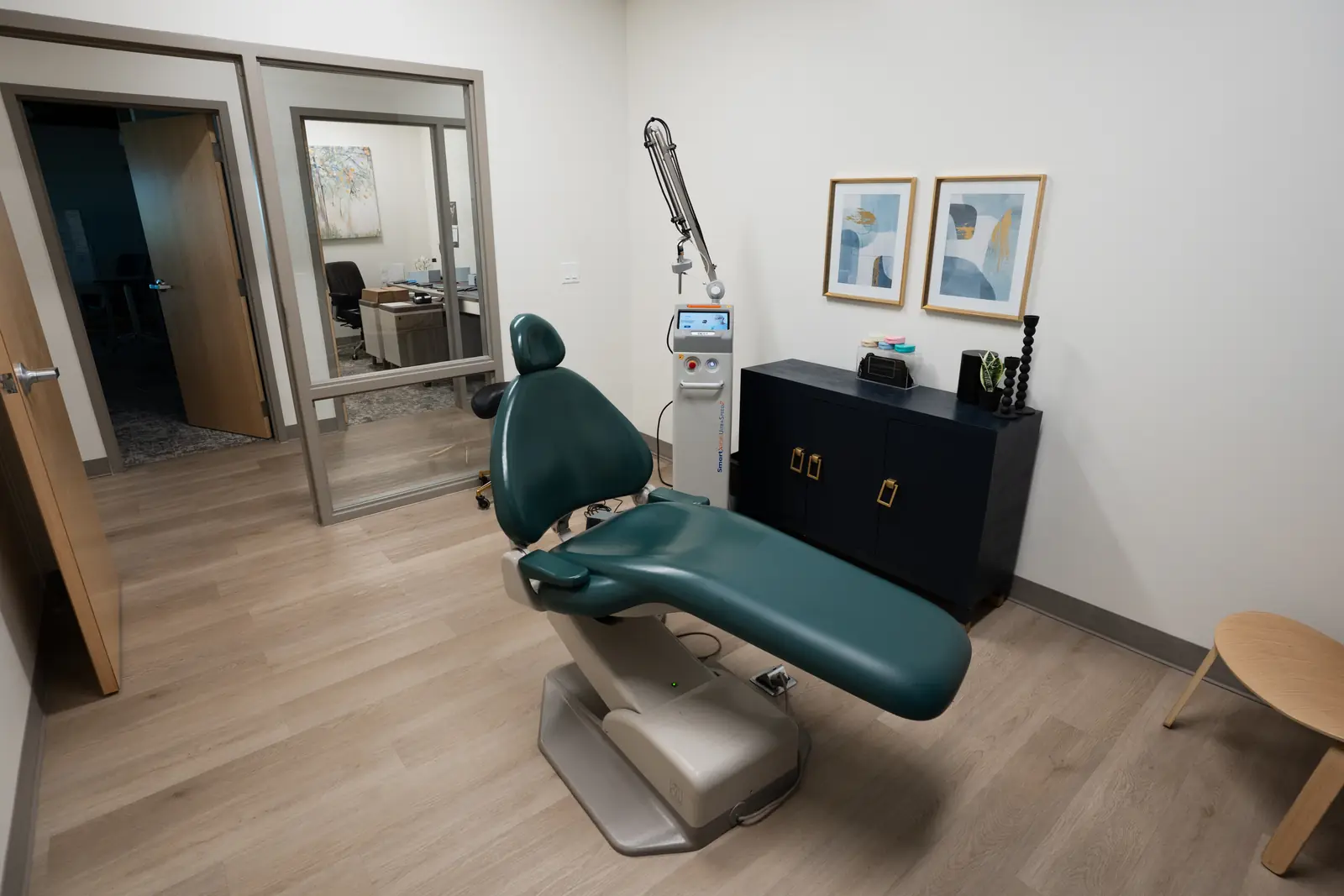
We often recommend three sessions of high intensity laser therapy with the DEKA HILT laser, paired with a custom occlusal guard. The laser is designed to reach deep into sore jaw muscles and the joint area, and it may help ease pain and inflammation. Bite adjustments are also an option.
Address structure
If a narrow upper jaw is limiting space, DOMEzero expansion or Vivos appliance therapy may help create room, followed by clear aligners to refine the bite.
Support the muscles
Myofunctional therapy may help retrain tongue posture and breathing habits so the jaw can rest in a more relaxed position.
High intensity laser therapy for sore jaws
HILT stands for high intensity laser therapy. The DEKA HILT laser delivers pulsed laser energy that is designed to reach deeper into muscle and joint tissue than typical low-level lasers, with the goal of calming inflammation, easing pain, and helping tight muscles relax.
Sessions are done in our Draper office, with no incisions and no downtime. We usually recommend a series of three sessions, paired with a custom occlusal guard that protects the teeth and gives the jaw a comfortable resting position while the muscles settle. Dr. Buxton will explain what to expect during and after each visit.
- Non-invasive, no incisions, no downtime
- Designed for sore jaw muscles and joints
- Paired with an occlusal guard, and with bite adjustments when your bite is part of the problem
Laser therapy addresses the pain. If imaging and muscle testing point to a deeper cause, such as a narrow upper jaw or an airway that works hard at night, we'll talk about treating that too.
Many things can strain a jaw. We look at all of them.
Night guards can protect your teeth and may ease symptoms for some people. When the soreness keeps coming back, it helps to ask what is putting the jaw under strain in the first place. TMJ symptoms often have more than one contributing factor, so Dr. Buxton looks at each piece:
- Your bite: teeth that meet unevenly can make the jaw muscles work harder every time you chew or clench.
- The joint itself: how the jaw opens, closes, clicks, or catches.
- Muscles and habits: daytime clenching, stress, and posture can keep the jaw, temples, and neck tight.
- Sleep and breathing: for some people, harder breathing at night plays a role. For many others it does not, and we will tell you what we find.
Your plan is built around what your exam actually shows. That may include DEKA HILT laser therapy paired with an occlusal guard, bite adjustments, refining your bite with clear aligners, myofunctional therapy to help the jaw and tongue rest more comfortably, or airway-focused care when sleep is part of the picture.
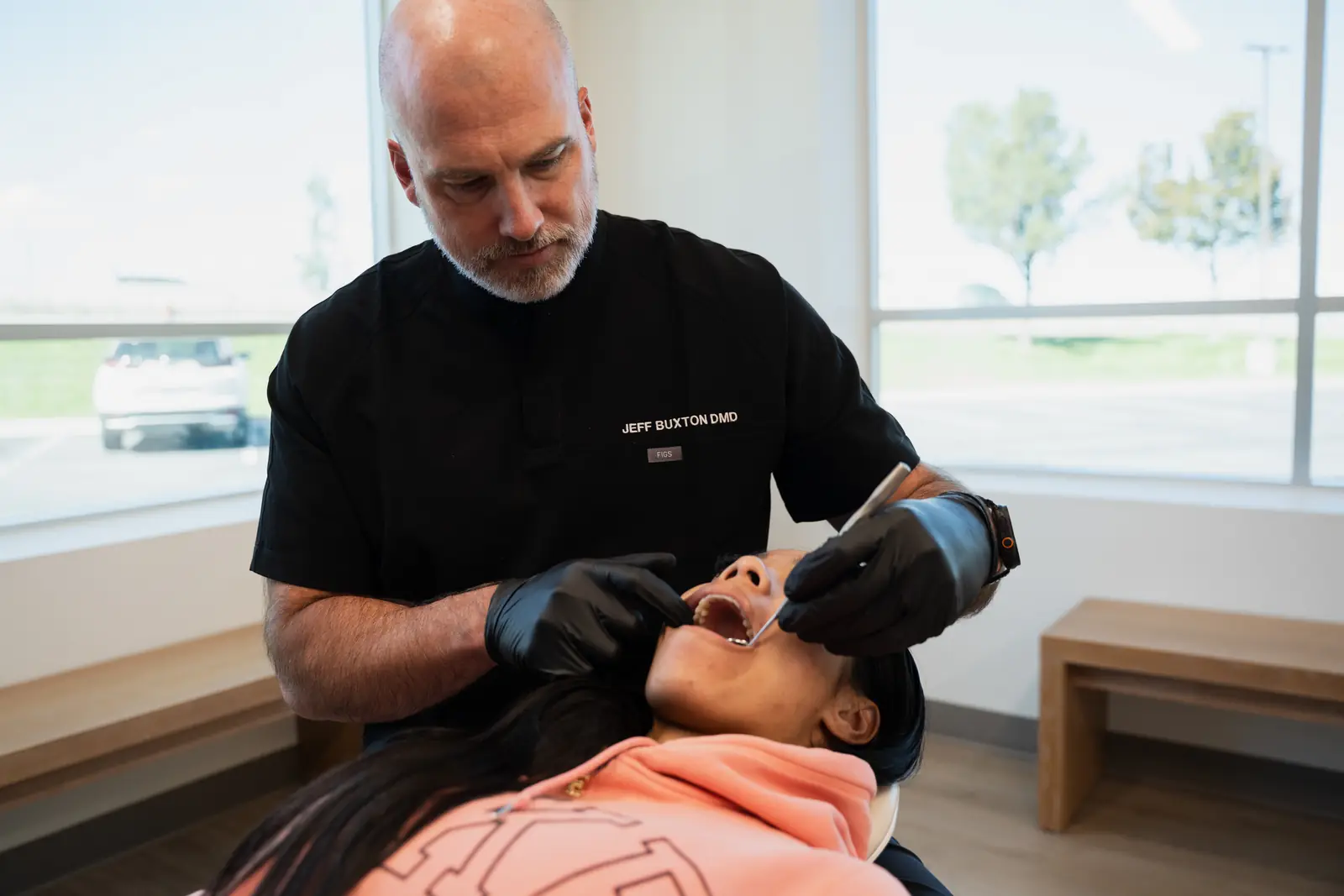
Hear it from Dr. Buxton
Short videos from Dr. Jeff Buxton. Educational only; every patient is different.
And when we treat the airway issues, often the TMJ issues resolve. Most common patterns that I see, of course, they're not waking up, feeling rested. That's a big one. Caffeination throughout the day. Some of the other ones that you don't really think of are headaches when we're clenching or we're grinding our teeth during the night.
We're causing our muscles to fire all night long. You're going to have some muscular issues. Those muscles are going to be... uncomfortable and it's not going to take much to cause triggers. And those triggers lead to migraines. Those triggers lead to lots of tension in the neck, shoulders. Even sometimes you're going to get ringing of the ears.
Often I see patients who have airway issues have TMJ issues as well. And when we treat the airway issues, often the TMJ issues resolve. And you stack that on top of poor sleep and you've got someone who can't function.
Have you ever been told that you grind your teeth and that it's due to stress? I'm here to tell you that it is, but it isn't. It's actually due to respiratory distress. So when we grind our teeth, we're bringing our jaw forward, which in turn opens up our airway so that we can breathe better.
Without getting that oxygen in, our body is feeling that oxidative stress. So that is why you're most likely grinding. And if you are grinding, that's a sure sign that you should probably get checked out. See what your sleep looks like.
What patients and families say
Real Google reviews from our Draper office, Dr. Buxton's patients, and Toothpillow families. Individual experiences; every airway is different.
"Dr. Buxton really cares about his patients. I couldn't be happier with the results! ... Not to mention the new office and decor are absolutely stunning. Everyone in the office is so friendly!"
"Love this place so much! They Have helped me with my kids but also myself. AMAZING!!!"
"Dr. Buxton is a great dentist!! He is thorough and patient. Really enjoy all of his staff too. They are all very professional. Highly recommend!"
Frequently asked questions
What causes TMJ pain?
TMJ symptoms can have several contributing factors, including jaw position, bite, muscle tension, clenching and grinding, and in some people, breathing problems during sleep. That is why we evaluate the jaw, bite, and airway together instead of looking at one piece at a time.
Why does diagnosis matter so much for TMJ?
Because jaw pain can come from the joint, the muscles, the bite, the airway, or a mix of them. A treatment that helps one cause may do little for another. That is why we use 3D imaging, hands-on muscle testing, and a digital bite scan to find out which it is before recommending anything.
Is a night guard enough for TMJ?
A night guard can protect your teeth and may ease some symptoms. It is a different approach from ours, which looks at why the jaw is under strain in the first place, such as a narrow upper jaw or an airway that may be working hard at night.
What is the DEKA HILT laser?
HILT stands for high intensity laser therapy. The DEKA HILT laser is a medical laser designed to deliver energy deeper into muscle and joint tissue than typical low-level lasers, with the goal of easing pain and inflammation. For TMJ symptoms we usually recommend a series of three sessions, paired with a custom occlusal guard. There are no incisions and no downtime, and results vary from person to person.
Can TMJ be related to sleep apnea or snoring?
They can show up together. When breathing is harder at night, some people clench or shift the jaw forward. If you snore, grind, or wake up tired, we may recommend an at-home sleep test. A diagnosis of sleep apnea requires proper testing and interpretation by qualified providers.
What is DOMEzero, and how could it help my jaw?
DOMEzero is an adult palatal expansion protocol that combines minimally invasive expansion with clear aligners. For patients with a narrow upper jaw, creating more room may help the tongue and lower jaw rest in a more comfortable position. Learn more on our DOMEzero page.
Do you treat TMJ near Salt Lake City?
Yes. Our office is in Draper, an easy drive for patients from Salt Lake City, Sandy, South Jordan, and across the Salt Lake valley. Start with an adult airway consultation.
How long does TMJ treatment take?
It depends on what your scans and exam show. Some patients focus on comfort and muscle therapy, while others go through expansion and aligners over a longer timeline. We will give you a clear outline at your consultation.
Treatments that often go together
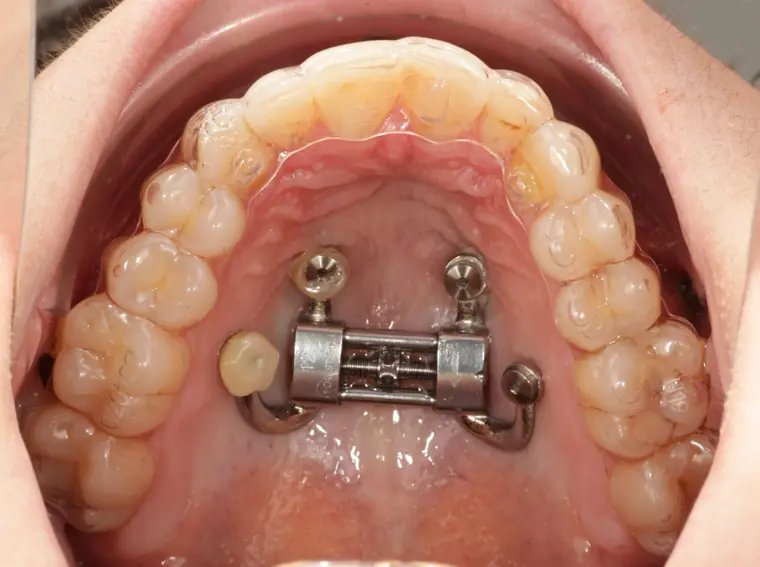
DOMEzero Expansion
Adult palate expansion paired with clear aligners from day one, designed to widen the upper jaw without the big front-tooth gap.
Learn more →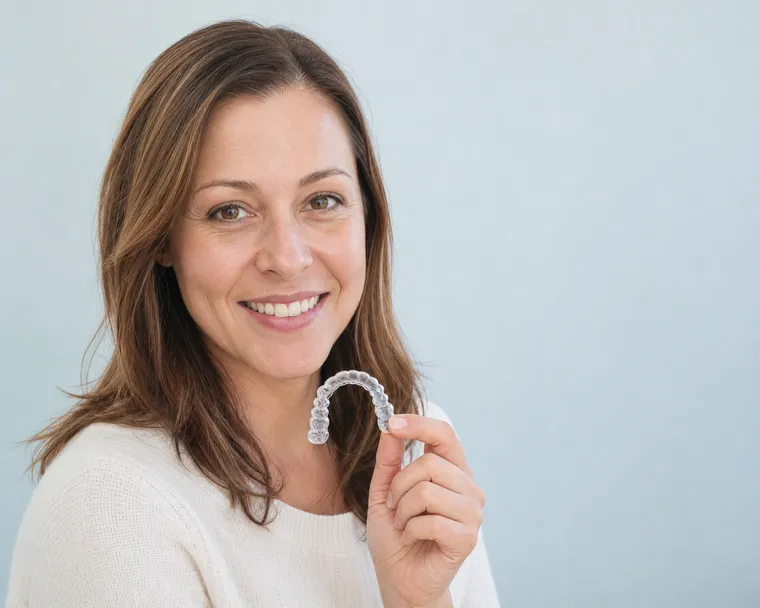
Adult Clear Aligners
AIRTHO clear aligners, planned around your airway and tongue space, usually after expansion to guide your teeth into their new room.
Learn more →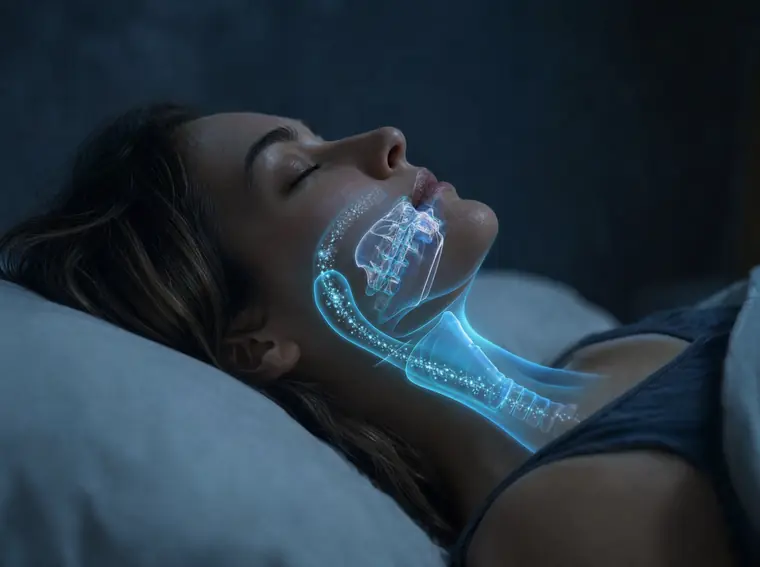
Sleep Apnea Treatment
Snoring, waking tired, or struggling with CPAP? An airway-first plan that starts with a sleep test and looks for the root cause.
Learn more →Schedule your airway consultation
Book online or call. Consultations for kids, teens, and adults at our Draper office.
14203 Minuteman Drive #101
Draper, UT 84020
Just off I-15, minutes from IKEA
Monday to Friday, 9 AM to 5 PM
"Great place! They are doing it differently. Well done!"
Request Your Airway Consultation
Tell us a little about what's going on. Our team will call you to find a time that works. No pressure, just answers.